Journal
Dried Fruit Lunchbox Ideas for Kids in Kenya
By Faith Wairimu, Hospitality & Gifting Lead
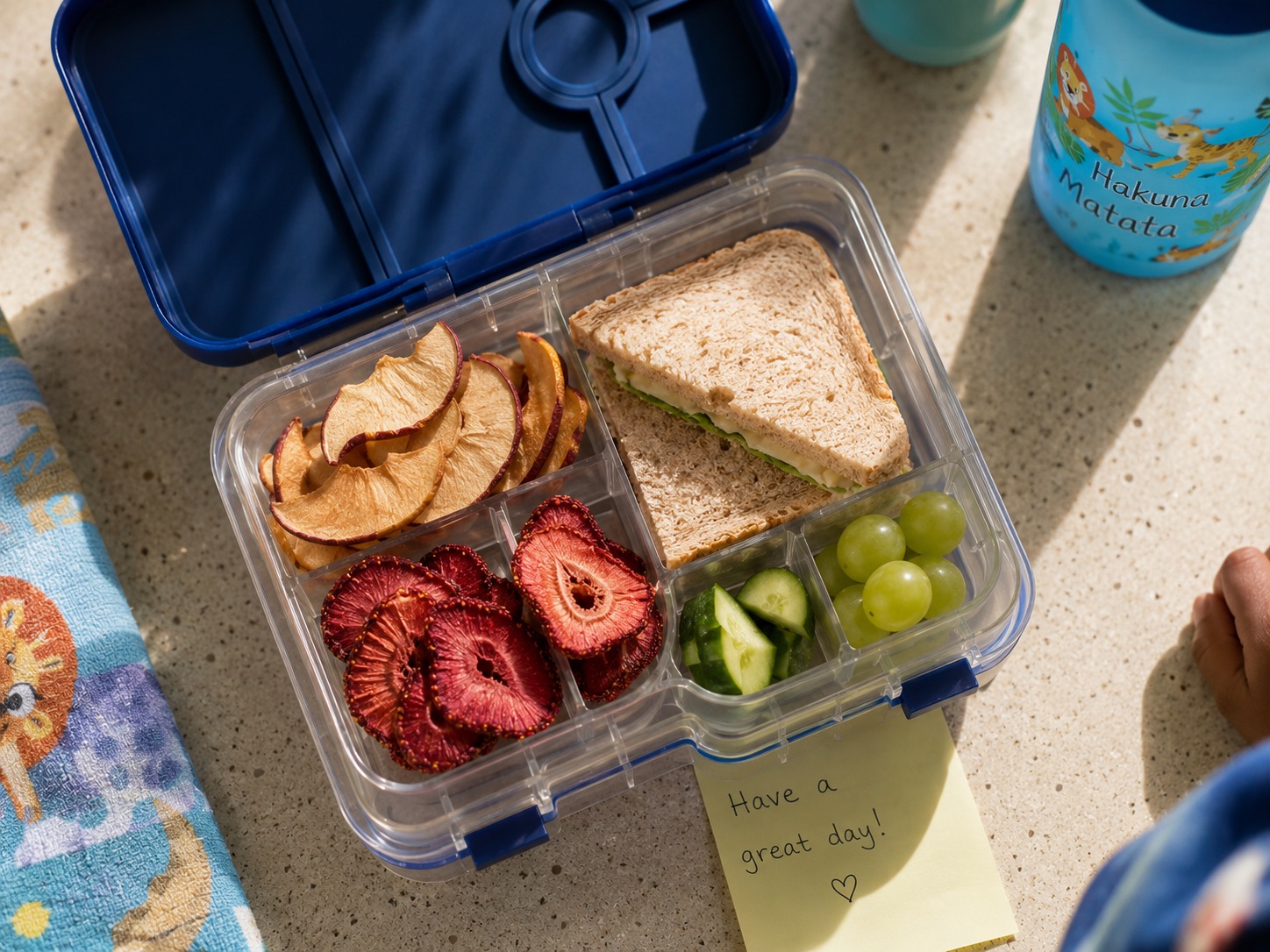
A lunchbox snack has a short list of real requirements: it can't leak, it can't need refrigeration, and it has to survive a few hours in a bag before anyone eats it. Dried fruit meets all three better than most of what ends up in a Kenyan school lunchbox.
Why it beats fresh fruit in a lunchbox
Fresh fruit cut in the morning is browning, sweating, or bruised by lunchtime, especially in a warm bag with no refrigeration. Apple slices dried the day before look and taste the same at midday as they did when packed, with none of the sogginess that makes kids leave half a fresh fruit portion uneaten.
Why it beats packaged snacks
Most packaged lunchbox snacks marketed as healthy still carry added sugar, and the ones that don't are often plain and unappealing to a kid choosing between that and a friend's sweets. Dried fruit's natural sweetness gives kids something that tastes like a treat without the added sugar packaged alternatives usually carry.
Portioning it properly
A small handful, roughly a tablespoon or two, is a sensible lunchbox portion rather than a full 100g pouch. Buying a large pouch and splitting it into smaller reusable containers at home works out considerably cheaper per lunchbox than buying individually packaged snack portions.
Which varieties work best for kids
Apple and strawberry slices tend to be the easiest sell for kids who are new to dried fruit, since both are mild and closer in flavor to fruit they already know. Mango and pineapple work well once a child is used to dried fruit generally, since their flavor is more concentrated and can be a bigger jump from fresh for a first try.
Mixing it into the lunchbox rather than serving it alone
Dried fruit pieces mixed into a small container with a few nuts or seeds reads as a more substantial snack than fruit on its own, and gives some fat and protein alongside the fruit's natural sugar rather than a sugar hit on its own.
A practical note on choking risk
As with any dried fruit or firm snack, use judgment for very young children. Whole slices are firmer than fresh fruit and should be cut smaller or supervised for toddlers the way you would with any chewy snack.
Introducing a new variety gradually
If a child hasn't had dried fruit before, send one variety at a time rather than a mixed handful, so it's clear which one they actually liked if half the portion comes back uneaten. Once you know their preference, you can build the lunchbox portion around that variety and use the others yourself rather than guessing at a mix every morning.
Keeping a lunchbox stock going
Because dried fruit doesn't need refrigeration, a stocked bag of two or three varieties in the pantry means lunchbox prep is grabbing a handful rather than washing and cutting fresh fruit every morning before a school run.
Bring Preserved
Sunshine to
Your Own Table
Ready to bring preserved sunshine to your own glass, table, or venue?