Journal
Why We Slow-Dry Our Citrus (And What That Actually Means)
By Martin Kilombe, Founder
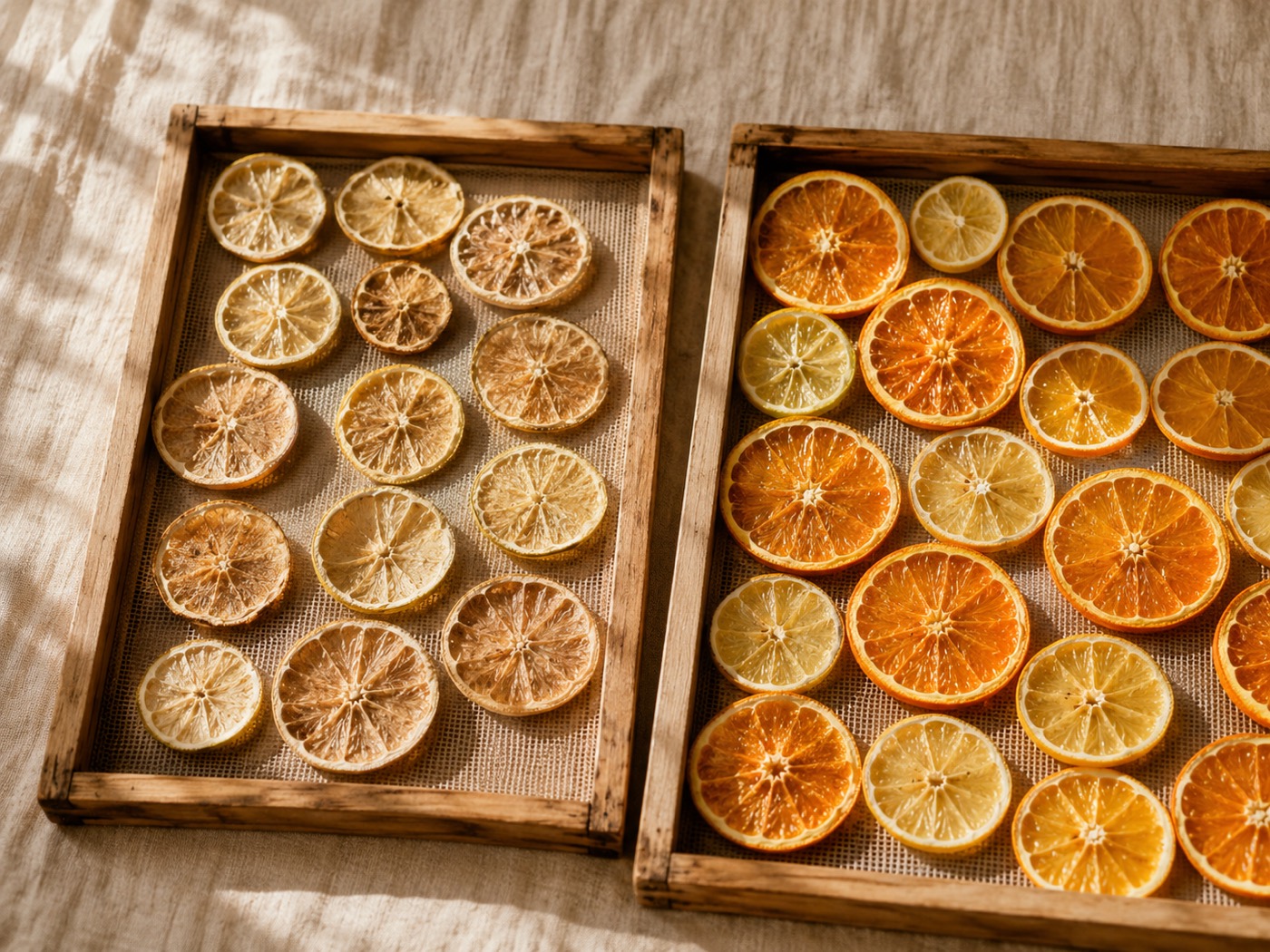
"Dehydrated" covers a wide range of outcomes. Some methods prioritize speed and shelf life above everything else, and the fruit pays for it: flat color, brittle texture, and almost no aroma left by the time it's packed. We do it differently, and it takes longer on purpose.
Low heat, longer time
Most of our citrus spends considerably longer in the dehydrator than a fast-dried alternative would. Lower temperatures mean the natural sugars and oils in the peel don't caramelize or burn off, which is where most of a citrus wheel's aroma actually lives.
Selected before it's dried
Slow drying only pays off if the fruit going in is worth preserving. Every batch is selected for color, ripeness, and shape before it goes anywhere near a tray: a wheel that starts dull won't finish vivid, no matter how it's dried.
What you actually notice
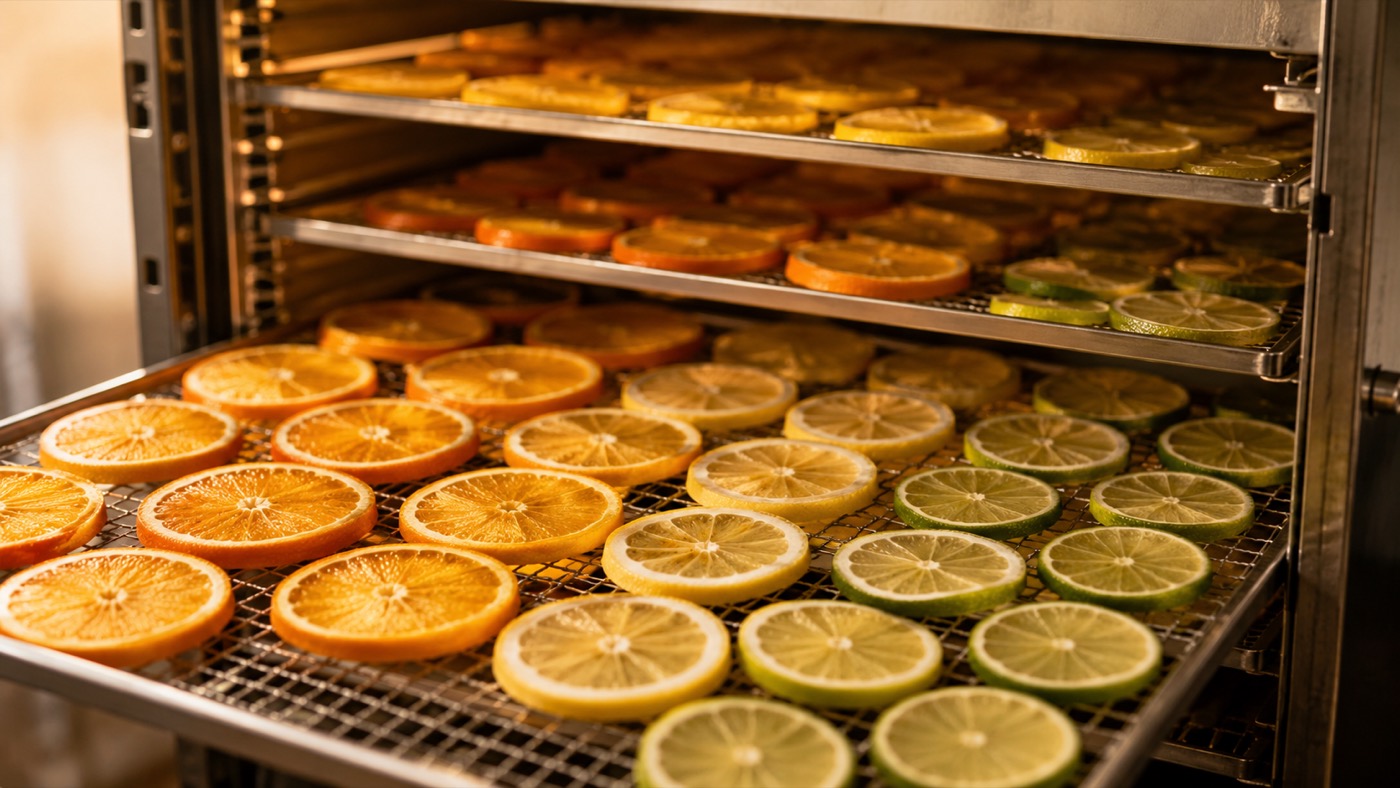
The difference shows up in three places: color (bright, not browned), aroma (still present when you open the pouch), and texture (a slight give, not a snap). Those three things are the whole reason a dried citrus wheel can double as a garnish instead of just a shelf-stable snack.
- Color holds because low heat doesn't caramelize the natural sugars
- Aroma survives because the oils in the peel aren't cooked off
- Texture stays workable, so wheels don't shatter when handled
What "low and slow" looks like in practice
There's no single dial we turn once and forget. Different fruits and different slice thicknesses hold water differently, so the schedule gets adjusted by feel and by batch rather than run on a fixed timer regardless of what's on the tray. It's slower to manage than one blanket setting for everything, which is part of why fast, high-heat drying is more common industry-wide: it's easier to run at scale, even though the fruit pays for it.
Why this matters more in Kenya's climate
Heat and humidity swing a lot across Kenya, from Nairobi's cooler evenings to the coast's constant humidity, and that makes a fast-dried product with more residual moisture even less stable here than it might be somewhere drier and more consistent. Slow, low-temperature drying pulls the water content down properly the first time, so the finished wheel doesn't depend on a cold chain or careful climate control to stay good. That matters in a market where not every kitchen, bar, or delivery route has reliable refrigeration end to end.
Made for use, not just storage
None of this is about shelf life for its own sake. Ours happens to last 10 to 12 months, but that's a byproduct of doing it slowly, not the goal. The goal is a piece of fruit that still behaves like fruit: something you'd want on the rim of a glass, not just in the back of a pantry.
It's a slower, more selective process than it needs to be if shelf life were the only target. We think that's the right trade.
Bring Preserved
Sunshine to
Your Own Table
Ready to bring preserved sunshine to your own glass, table, or venue?