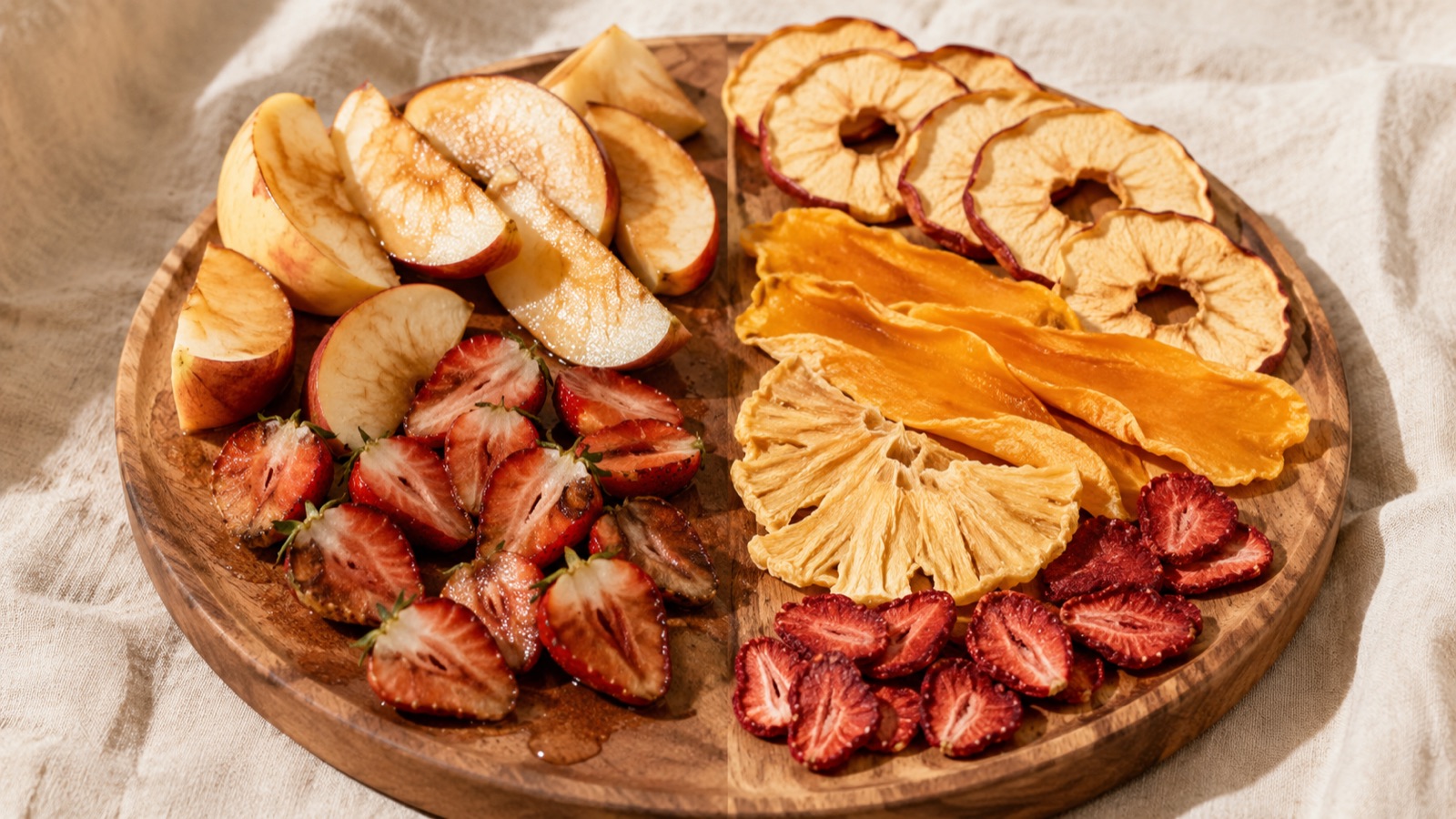
Fresh fruit has one real advantage on a grazing board: it looks like fresh fruit. Past that first impression, dried fruit outperforms it on almost every measure that actually matters for hosting. Here's an honest comparison, not a sales pitch for one side.
Where fresh wins
Fresh fruit has a brightness and juiciness dried fruit can't match, and for anything you're eating on its own rather than pairing with cheese or meat, fresh is genuinely the better choice. If you're serving a fruit bowl as the centerpiece of the table, use fresh.
Where dried wins: time
Fresh cut fruit starts changing the moment it's cut. Apple slices brown within the hour, fresh strawberries sweat and bleed color into whatever they touch, and fresh pineapple dries out and curls at the edges after a couple of hours at room temperature. Our dried versions look the same at the end of a four hour gathering as they did at the start, because the water that would cause all of that has already been removed.
Where dried wins: prep
A fresh fruit platter needs to be cut close to serving time, which means prep competes with everything else you're doing before guests arrive. Dried fruit goes straight from the pouch onto the board, no cutting board, no knife, no timing it around when people actually show up.
Where dried wins: mixing with savory
Fresh fruit's moisture is a problem next to cheese and cured meat, since it can make the board look wet and cause other items to spoil faster if they're touching. Dried fruit sits next to cheese and charcuterie without transferring any moisture, which is part of why grazing boards lean so heavily on dried fruit rather than fresh in professional catering.
Where fresh still has an edge
Fresh fruit is usually cheaper by weight if you're just feeding a small group and not trying to build a board that holds up for hours. If your gathering is short and you're eating shortly after setting up, the shelf-stability advantage of dried fruit matters less.
Waste is the real cost difference
Fresh fruit bought for a board that doesn't get fully eaten is fresh fruit thrown away the next day. Dried fruit left over from a board goes back in a sealed pouch and gets used at the next gathering or eaten as a snack during the week. Once you account for what actually gets wasted rather than just the sticker price at the shop, the cost gap between fresh and dried narrows considerably.
A practical middle ground
Most of our own hosting uses both: fresh fruit for a bowl or platter people eat from directly, and dried apple, mango, strawberry, and pineapple worked into the grazing board itself alongside the cheese and meat. Neither replaces the other, they're doing different jobs on the same table.
For the full breakdown of building a board, see our grazing board guide.
Bring Preserved
Sunshine to
Your Own Table
Ready to bring preserved sunshine to your own glass, table, or venue?