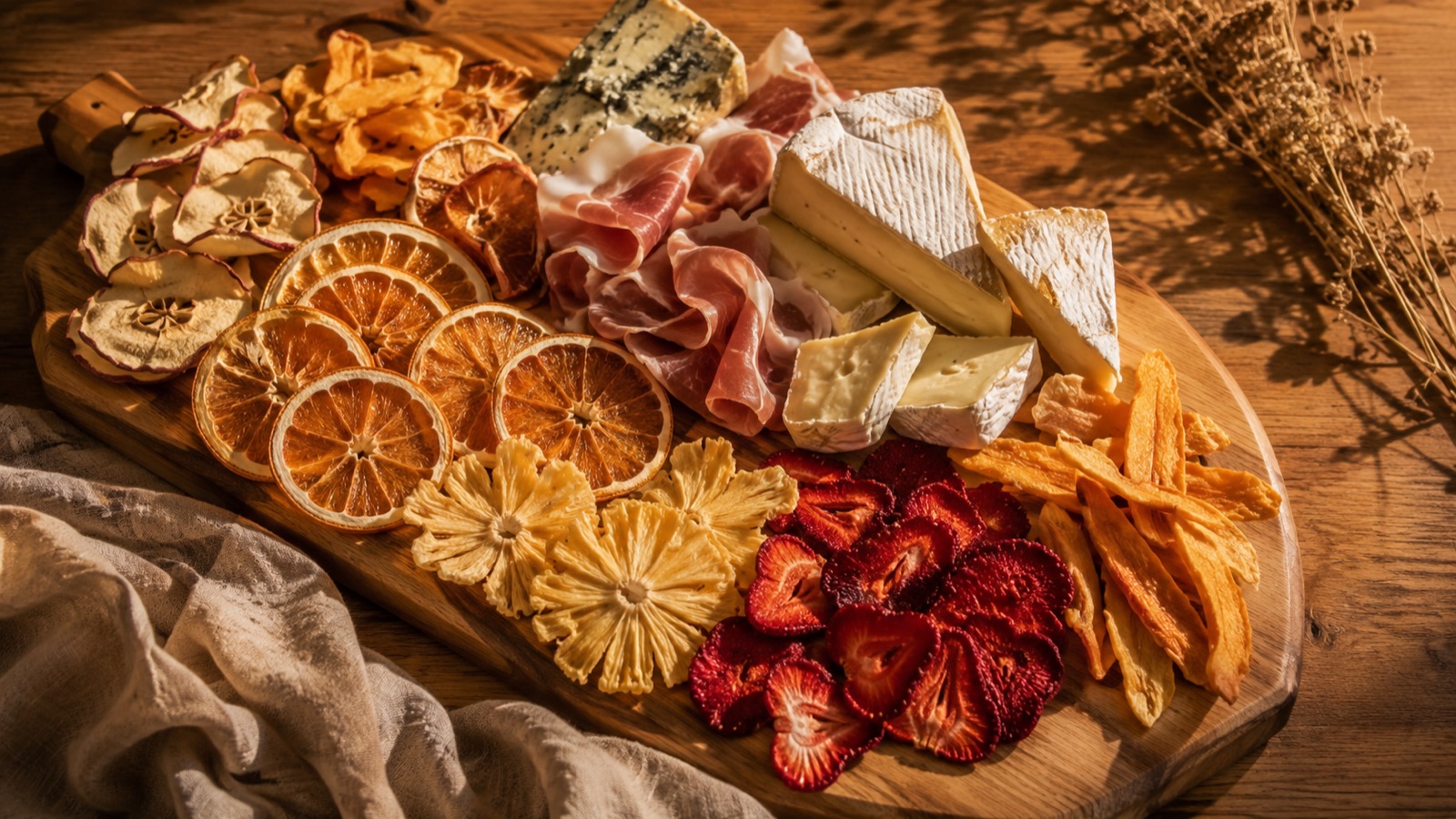
Citrus wheels get most of the attention on our boards, mostly because that's where we started, but the dried fruit side of the range earns its place too. Apple, mango, pineapple, and strawberry sit well alongside cheese, nuts, and cured meats, and they solve a problem fresh fruit can't: they don't weep, brown, or go soft while you're still setting the table.
Why dried fruit outlasts fresh on a board
Fresh fruit on a grazing board is a countdown. Cut apple browns within the hour, strawberries sweat and bleed into whatever they touch, and pineapple starts to look tired long before your first guest arrives. Dried fruit sits at room temperature for the length of an afternoon without changing shape or color, which matters more in Nairobi than somewhere cooler. Lay the board out at midday for an evening gathering and the dried apple will look the same at 7pm as it did when you set it down. We lay out the fuller side-by-side comparison in dehydrated vs. fresh fruit for grazing boards.
Building the board
Start with the cheese and cured meats, since they anchor the layout, then fill in around them with the dried fruit in loose clusters rather than a single tidy row. Apple slices work well tucked next to a soft cheese, their pale gold color and mild sweetness cutting through something rich like brie. Mango slices pair naturally with cured meats such as chorizo or bacon jam, the fruit's sweetness balancing the salt. Strawberry slices carry the boldest color on the board and work well scattered near crackers or a dessert corner if the board is running into pudding, though they're worth grabbing when you see them in stock since they're the one variety in the range that's seasonal rather than year-round. Pineapple pieces hold up best near nuts, adding a chewy texture the crunch plays against.
If you want citrus in the mix too, a few lemon or orange wheels add height and a different silhouette than the flatter dried fruit pieces, and they photograph well if the board is going on a story before guests arrive.
A mistake worth avoiding
The most common misstep is piling one variety in a dense heap instead of spreading two or three thin. A heap looks generous for the first ten minutes and picked-over for the rest of the afternoon. Thin, overlapping clusters look fuller for longer and make it easier for guests to take a piece without disturbing the whole pile.
How much to buy per board
For a board serving 8 to 10 people as a shared starter, one 100g pouch of two or three dried fruit varieties is usually enough, spread out rather than piled. Hosting a larger gathering, or running the board as the main event through an afternoon, move up to the 200g pouches, or consider The Full Collection, which gives you all eight varieties in one box and takes the guesswork out of what to buy.
Storing what's left over
Whatever doesn't get eaten goes straight back into a sealed pouch or jar, not left out on the board overnight. Nairobi's humidity is the main thing working against shelf life once a pack is open, and fruit left exposed on a board picks up moisture and softens within a day or two. Sealed properly, opened dried fruit is still good for weeks.
Not just for Sunday brunch
The same board works for a bridal shower table, a corporate lunch spread, or a smaller weekday cheese plate for two. Once you have a couple of varieties in the cupboard, putting a board together becomes a five minute job rather than a grocery run.
If you're mixing drinks for the same gathering, our mocktail garnish guide covers how the citrus range works across non-alcoholic drinks, and the complete buying guide has everything else worth knowing about the full range before you order.
Bring Preserved
Sunshine to
Your Own Table
Ready to bring preserved sunshine to your own glass, table, or venue?