Journal
Dehydrated Citrus & Dried Fruit in Kenya: Buying Guide
By Martin Kilombe & Faith Wairimu, Founder & Hospitality and Gifting Lead
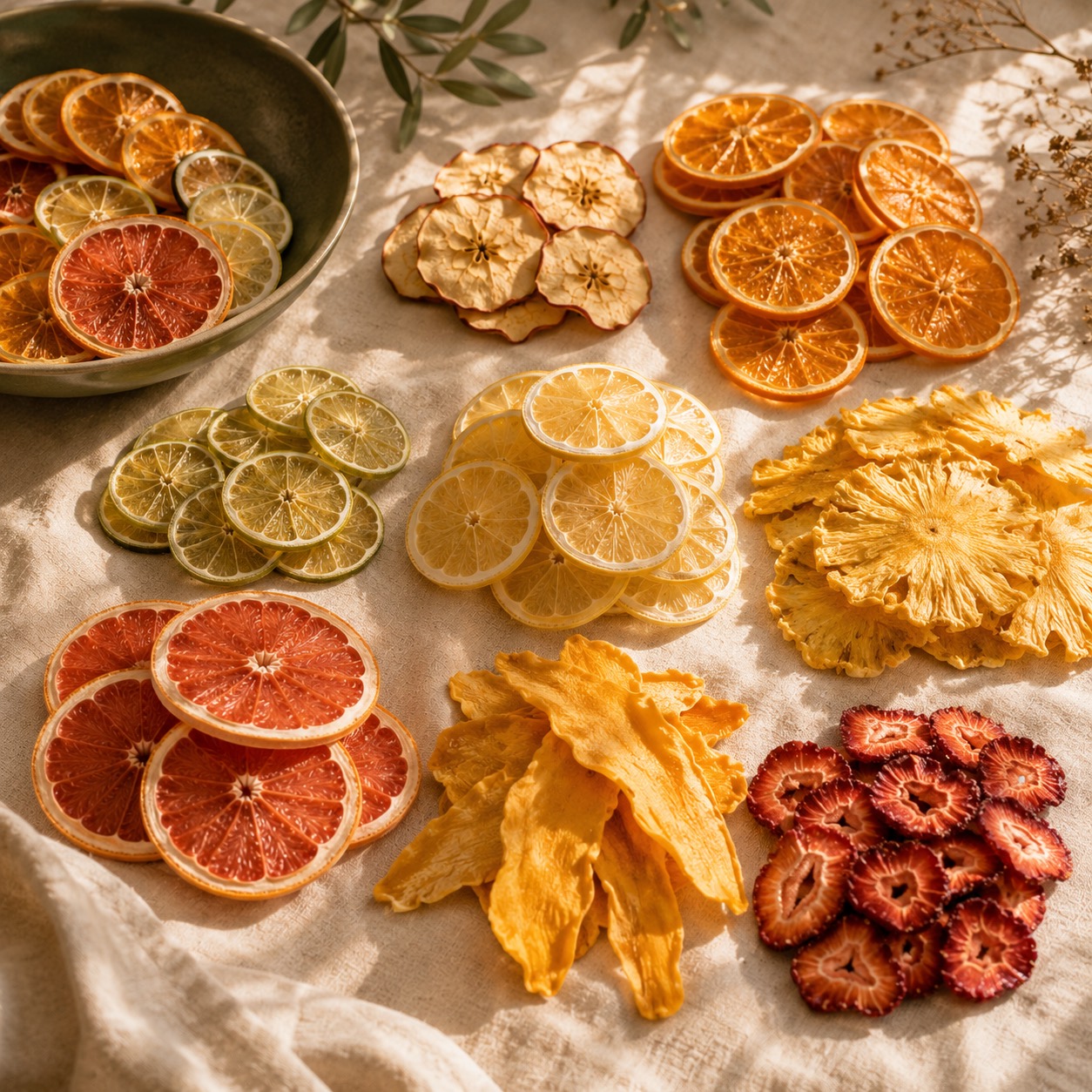
If you've searched for dried fruit in Kenya recently, you've probably landed on a marketplace listing, a wholesaler's bulk price sheet, or a gift shop's hamper page. Few of them tell you much about what you're actually buying. This is the guide we wish existed when we started: what dehydrated citrus and dried fruit actually are, how long they last, where the good ones come from, and how to buy them whether you're hosting six people or supplying sixty hotel rooms.
What "dehydrated" actually means
Not all dried fruit is made the same way, and the difference matters more than most labels let on. Fast, high-heat drying gets a shelf-stable product to market quickly, but the fruit pays for it: flattened color, a papery texture, and almost no aroma left by the time it reaches a pouch. Slow, low-temperature drying takes longer and costs more, but it keeps the natural sugars and oils intact, which is where most of a citrus wheel's color and scent actually live.
Neither approach is a secret. The difference shows up the moment you open the bag: does the lemon wheel still smell like a lemon, or does it smell like nothing at all? We go into why slow-drying is worth the extra time in why we slow-dry our citrus, and the same reasoning is why we don't shortcut shelf life with sugar or sulphites either, covered in why we don't add sugar or preservatives.
How long it actually lasts
Done properly, dehydrated citrus and dried fruit have a genuinely long shelf life, typically 10 to 12 months in a sealed, resealable pouch or jar, kept away from direct sunlight and moisture. There's no refrigeration required and no additives doing the preserving. The water content is simply low enough that mould and spoilage have nothing to work with.
A few things to check before you buy, wherever you buy from:
- Resealable packaging. A bag that doesn't reseal properly lets moisture back in, which cuts shelf life fast.
- No added sulphites or preservatives, if "natural" or "no additives" matters to you. Read the ingredient list, not just the front label.
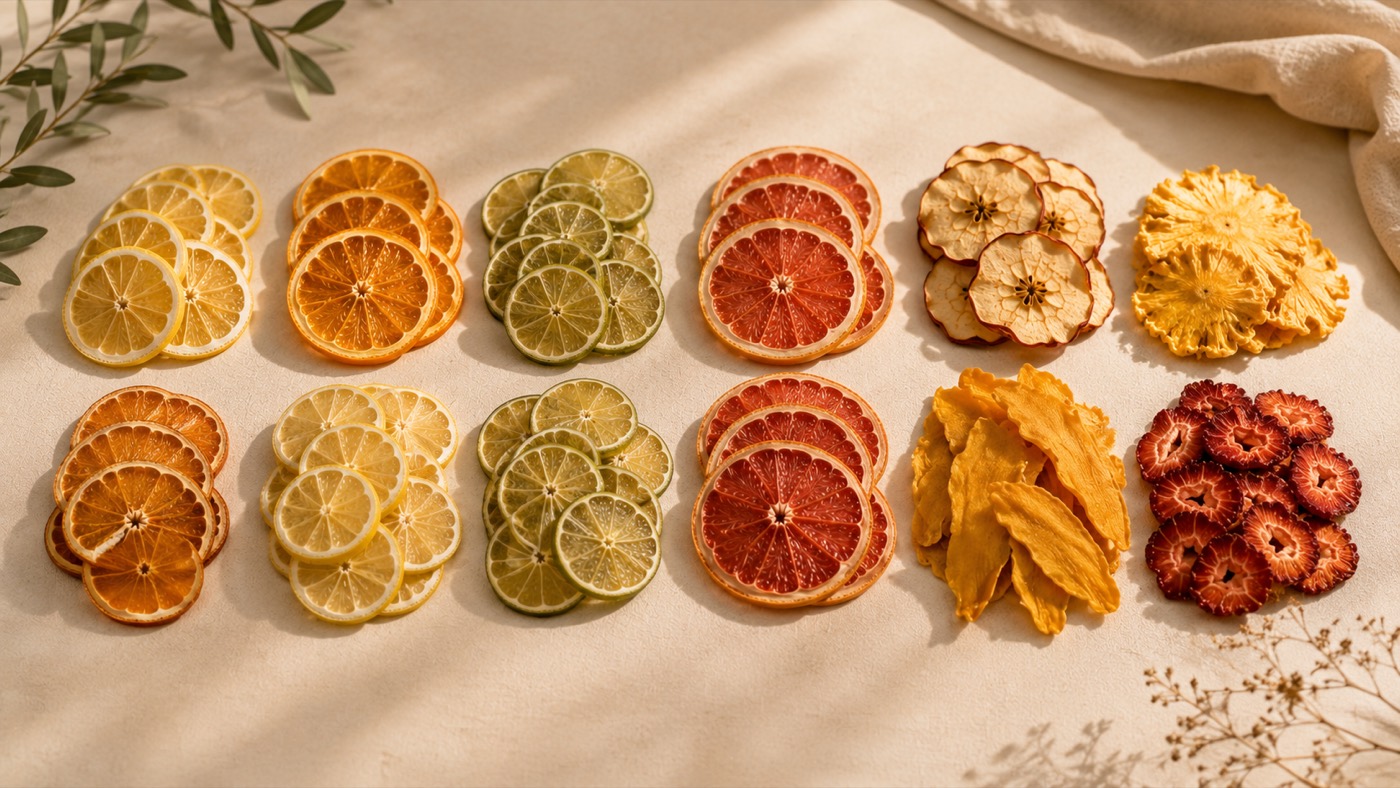
- Color as a proxy for quality. Dull, browned wheels usually mean high-heat drying. Bright, jewel-toned color is a decent sign the fruit was dried slowly and selected well to begin with.
Once opened, use common sense: reseal tightly, keep it dry, and finish a pouch within a few weeks of opening for the best texture and aroma, even though the shelf-stable window is much longer. We cover this in more depth, including how Nairobi's humidity specifically affects an opened pack, in how long dehydrated citrus wheels actually last.
Where the fruit comes from
Quality dehydrated citrus starts long before it reaches a dehydrator. The fruit has to be selected for ripeness, color, and shape while it's still fresh, because a dull, uneven slice going in won't turn vivid coming out no matter how carefully it's dried afterward. We go into the actual sourcing and selection process in detail in where our citrus is grown and dried, including why we source locally rather than importing pre-dried stock. Most of the range holds a steady supply year-round; strawberry is the one exception, and we explain why in strawberry slices: why they're seasonal.
Buying it: marketplace vs. direct from a producer
Most dried fruit searches in Kenya lead to one of two places: a general marketplace (think Jumia, Carrefour, or a supermarket aisle) or a producer selling direct. Both have a place, but they solve different problems. Marketplaces are convenient and familiar; direct-from-producer usually means fresher stock, more control over how it was dried, and a shorter path between the drying tray and your door. We've laid out the real trade-offs, not just a sales pitch for one side, in marketplace vs. buying direct from the producer.
Ways to use it at home
Dried citrus and dried fruit are far more than a shelf-stable snack. A lemon or lime wheel floated in sparkling water or notched onto a glass rim does more work per gram than almost anything else on a home bar cart, and we cover five specific ways to do that in styling a citrus wheel garnish at home. Dried fruit also earns its place well beyond drinks: dropped into a pot of tea, it adds color and a light note without any bitterness, and laid across a grazing board or dessert plate, it holds its shape and looks intentional for hours, not minutes, unlike fresh fruit cut for the same board, a comparison we lay out honestly in dehydrated vs. fresh fruit for grazing boards.
If tea is your main use case, we've put together six specific pairings worth trying in dried fruit for tea. If it's a full spread, our Nairobi grazing board guide covers how to build one that holds up through an afternoon. If it's drinks, mocktail season covers how dried citrus fits the current shift toward non-alcoholic serves. And if you already know the drink and just need the variety:
- Grapefruit vs. orange, for cocktails
- Lime, for mocktails and sparkling water
- Pineapple and mango, for rum
For hotels, bars, and cafés
Buying for a venue is a different problem than buying for your own kitchen: consistency across batches, packaging that survives handling behind a bar, and a supplier who can actually quote volume pricing rather than pointing you at retail packs. If you run a bar or hotel in Nairobi, a dedicated cocktail garnish supplier walks through what to look for, and wholesale dehydrated citrus for hotels and cafés covers actual volumes, pricing structure, and realistic lead times. If you already know you want citrus wheels and are deciding what to stock first, which citrus wheel Nairobi bars order most breaks down the actual order pattern by variety.
For gifting
Dried citrus and dried fruit gift boxes have become a genuine alternative to the usual chocolate or flower hamper, especially for corporate gifting where something a little more considered goes a long way. Corporate gift hampers in Nairobi covers how to put one together, and what makes it feel like an upgrade rather than a substitute. If you're deciding between our two ready-made boxes, The Sunrise Set vs. The Full Collection breaks down what's actually in each one and which one makes sense for a given list.
Is it actually healthy?
Dried fruit gets treated as either a health food or a hidden sugar trap, and neither label is quite right: drying removes water, not sugar, so it's a genuine improvement over processed snacks but still worth eating as a handful rather than a full pouch. We give it a straight, no-marketing answer in are dehydrated fruits healthy, and cover the specific ingredient choice behind it in why we don't add sugar or preservatives. If you're packing it for kids specifically, dried fruit lunchbox ideas covers what actually works in a school bag.
Where to start
If you only take one thing from this guide: dried fruit quality is mostly decided before it ever reaches a dehydrator, and it's easy to check for once you know what to look for. Beyond that, whether you're floating a wheel in a glass at home or restocking a bar in Nairobi, the questions worth asking are the same. We've tried to answer them properly, post by post, rather than leave you with another vague product description.
Frequently asked questions
How long does dehydrated citrus actually last?
10 to 12 months in a sealed, resealable pouch or jar, kept away from direct sunlight and moisture. No refrigeration needed. For storage tips specific to Kenya's climate once a pack is open, see how long dehydrated citrus wheels actually last.
Do I need to refrigerate it?
No. The water content is low enough that mould and spoilage have nothing to work with, so a cool, dry cupboard or bar shelf is fine.
What's the difference between a marketplace and buying direct from a producer?
A marketplace listing is optimized for browsing and price comparison, not for telling you how or when the fruit was dried. Buying direct usually means fresher stock and a real point of contact if something's off. We cover the full trade-offs in marketplace vs. buying direct.
Where does Citrus & Co.'s fruit come from?
Small and mid-sized farms across Kenya, not a single estate or an import broker. We cover the sourcing and selection process in where our citrus is grown and dried.
Do you deliver across Kenya, and internationally?
Yes. Within Kenya, Nairobi orders typically arrive in 1–2 business days and elsewhere in Kenya in 3–5 days. We also ship to select international destinations, currently East Africa, the UK, UAE, and South Africa.
Bring Preserved
Sunshine to
Your Own Table
Ready to bring preserved sunshine to your own glass, table, or venue?