Journal
Are Dehydrated Fruits Healthy? A Straight Answer on Sugar and Snacking
By Martin Kilombe, Founder
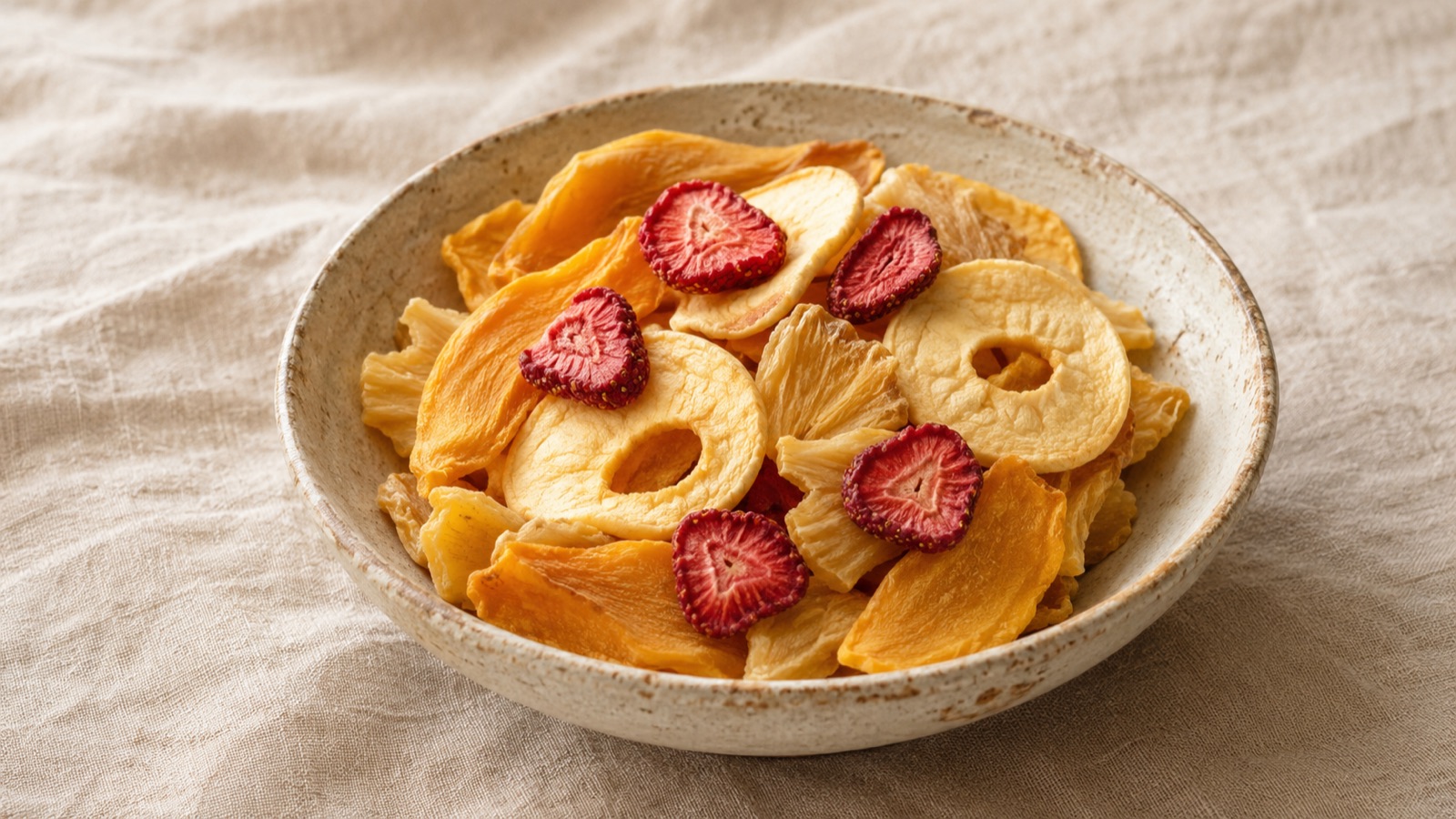
Dried fruit gets treated as either a health food or a hidden sugar trap, and neither label is quite right. Here's the honest picture, based on what actually happens when fruit is dehydrated rather than what a marketing label says.
What drying does and doesn't do
Dehydrating fruit removes water, not sugar. The natural sugar that was already in the lemon, mango, or strawberry stays exactly where it was, just concentrated into a smaller, chewier piece. That's true of any dried fruit, ours included, and it's worth knowing before you eat a handful expecting it to behave like fresh fruit.
Why concentration matters for portion size
A 100g pouch of dried mango contains roughly the same fruit as several whole mangoes, just with the water gone. That makes it easy to eat more fruit sugar in one sitting than you'd naturally get through eating fresh fruit, since fresh fruit's water content fills you up faster. It's not a reason to avoid it, just a reason to treat a handful as a serving rather than working through a full pouch in one sitting.
What we don't add
None of our range has added sugar, syrup, or sulfites. Apple, mango, pineapple, and strawberry slices are dried at low heat with nothing added and nothing taken out beyond the water. What you're tasting is concentrated fruit, not fruit plus a coating.
How this compares to what you'll find in a supermarket
Some packaged dried fruit sold in supermarkets uses added sugar or sulfur dioxide to preserve color, which shows up on the ingredient label as sulfites. Ours doesn't use either, which is part of why our colors are more muted than a bright yellow dried mango you might see on a shelf elsewhere. That bright color is often the sulfites, not the fruit.
Where it fits as a snack
Dried fruit works best swapped in for a processed sweet snack, not stacked on top of your normal fruit intake. A small handful in place of a packet of sweets or biscuits is a genuine improvement: no added sugar, some fiber retained from the flesh and skin, and a texture that takes longer to eat than most processed snacks, which naturally slows down how much you get through. That's exactly why it works well in a school lunchbox too, covered in dried fruit lunchbox ideas for kids. For the specific ingredient choices behind our range, no sugar, no sulfites, no syrup, see why we don't add sugar or preservatives.
Citrus wheels are a different case
Our citrus wheels (lemon, orange, lime, grapefruit) are usually used a piece or two at a time in a drink or as a garnish rather than eaten by the handful, so the portion question matters less. They're also lower in sugar to begin with than the tropical dried fruits, since citrus itself is a less sweet fruit than mango or pineapple.
The honest summary
Dried fruit is a better choice than most processed snacks and a worse choice than eating the same fruit fresh, mainly because it's easier to overeat. Treat a handful as a serving, keep fresh fruit in your diet too, and you get the benefit of a shelf-stable, no-additive snack without the concentrated sugar catching you off guard.
Bring Preserved
Sunshine to
Your Own Table
Ready to bring preserved sunshine to your own glass, table, or venue?